
Windows 11 Haptic Feedback and Richer Interface Feel | UxionApps
Why this matters now
The next generation of digital products is being shaped by interaction quality. Clean layouts still matter, but modern experiences now need stronger motion, more responsive feedback, and subtle details that make software feel premium and intentional.
Interface design has entered a more mature phase. For years, most teams focused on visual polish, cleaner layouts, better typography, sharper spacing, and modern color systems. All of that still matters. But users now notice something deeper as well. They notice whether a product feels refined when they move through it.
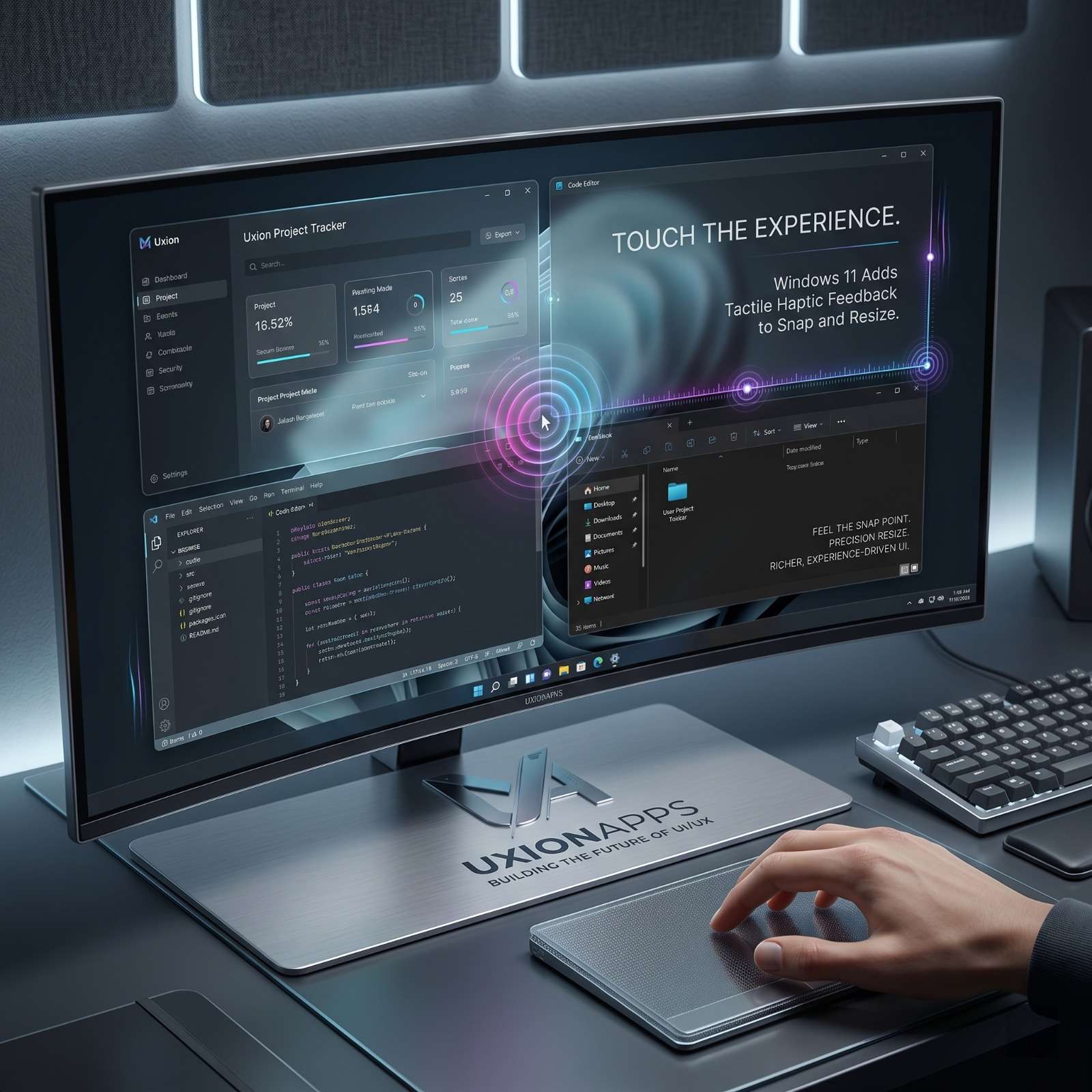
That is why this Windows 11 direction is interesting. Haptic feedback for actions like snapping and resizing windows points to a broader shift in product thinking. The best experiences are no longer just visually clean. They are becoming more tactile, more responsive, and more emotionally convincing.
What this Windows 11 update signals for UX design
When a major platform adds sensory feedback to common interface actions, it sends a clear message to product teams. Interaction design is becoming more important. The quality of a digital experience now depends on more than the screen itself. It depends on the reaction a user gets when they touch, drag, move, resize, or align something on the interface.
This matters because perception is built in small moments. A user may never describe haptic feedback in technical terms, but they can still feel when a product seems more thoughtful, more solid, and more complete. These subtle layers of response shape trust.
Why haptic feedback changes how software feels
Haptic feedback adds a physical sense of confirmation to a digital action. It gives a user a stronger signal that something happened, and that the system is responding with intention. That may sound simple, but it changes the emotional quality of the experience.
A product that responds clearly feels more reliable. A product that feels reliable often feels easier to use. And a product that feels easy to use is usually judged as higher quality, even before a user can explain why.
Good interaction feedback can help products feel:
- more responsive
- more premium
- more controlled and precise
- more comfortable to use over time
- more memorable in a crowded market
Modern UX is no longer only visual
A lot of businesses still treat UX as a screen-level problem. They think the work ends once the layout looks modern. But strong UX now includes movement, state changes, timing, gestures, transitions, feedback, and the overall sense of refinement from one interaction to the next.
This is what richer interface feel really means. It means software behaves in a way that feels deliberate. It means interaction is not flat. It means the user is getting better sensory confirmation, not just visual styling.
Even if a product does not use haptics directly, the lesson still applies. Teams should be thinking about the quality of every small response inside the interface. Hover states, drag behavior, resize logic, button feedback, loading motion, and transition timing all shape how professional a product feels.
Why businesses should care about interface feel
This is not only a design trend. It is a business issue. Users compare products quickly. If your app or platform feels awkward, flat, or outdated, people sense it almost immediately. If it feels smooth and refined, they are more likely to trust it, spend time in it, and believe it reflects a serious brand.
Better interaction quality can improve more than appearance. It can support onboarding, reduce friction, strengthen retention, and raise overall product perception. In competitive markets, that can make a real difference.
For founders and product teams, this is the real takeaway:
users do not only remember what your product lets them do. They remember how confident, smooth, and polished it felt while doing it.
How UxionApps builds more polished digital experiences
At UxionApps, we look at product quality as a full experience problem, not only a surface design problem. That means strong UI systems, clear user journeys, thoughtful interaction design, and product behavior that feels current and refined.
We help businesses create modern UI UX, scalable applications, websites, dashboards, and digital products that look professional and feel intentionally built. That combination matters more now because user expectations keep rising across every screen and platform.
What UxionApps focuses on
- modern UI UX design for apps and web platforms
- scalable product development for growing businesses
- clean interaction design that improves product perception
- future-ready digital experiences with strong visual and behavioral quality
Final thoughts
This move toward richer interface feel is a reminder that quality lives in the details. It lives in how products respond, how they guide, and how they confirm actions. As digital experiences continue to mature, tactile and sensory feedback will play a bigger role in what users consider premium.
Businesses that understand this shift early will build stronger products. Not just products that look modern, but products that feel modern too.
